


(CVN424)
Solengepras
PARKINSON’S DISEASE
Potentially a first in class, oral non-dopaminergic therapy for the broad treatment of the signs and symptoms (motor and non-motor) of Parkinson’s disease.
Improvements in daily function and well-being for people with Parkinson’s disease
In ARISE, once-daily oral solengepras was evaluated without dose titration across measures of everyday function, daytime alertness, and quality of life — outcomes that reflect the day-to-day experience of people with Parkinson’s.
MDS-UPDRS Part II, solengepras 150 mg at Week 12. p=0.0008
Lower scores = less impact on daily life
Positive impact across daily life, as reported by patients
Everyday motor tasks
Lower scores = less impact on daily life
Less impact of motor symptoms on daily activities, such as speaking, eating, dressing, and walking, with solengepras vs placebo
Daytime alertness
Lower scores = less daytime sleepiness
Less likely to doze off during daily activities, such as reading and sitting in traffic, with solengepras vs placebo
Quality of life
Lower scores = better quality of life
Less impact of Parkinson’s on quality of life, including mobility, emotional well-being, and communication, with solengepras vs placebo
Solengepras is an investigational therapy. It has not been approved by the U.S. Food and Drug Administration or any other regulatory authority.
Significant reduction in OFF time
At baseline, participants experienced an average of 5.65 hours of daily OFF time despite receiving levodopa, with nearly half also taking adjunctive therapies, including MAO-B and COMT inhibitors.
The reduction in OFF time was seen as early as Week 2, the first visit (0.75 hours vs placebo; nominal p=0.0022), and at every visit through Week 12.
p=0.0350 · -1.56 h vs -0.95 h from baseline
p=0.0468 · 1.58 h vs 0.98 h from baseline
Solengepras is an investigational therapy. It has not been approved by the U.S. Food and Drug Administration or any other regulatory authority.
Solengepras was well tolerated over 12 weeks
Most adverse events were mild or moderate. Few typical dopaminergic adverse events were observed, consistent with solengepras not acting directly on dopamine receptors.
discontinued for any reason, vs 10% with placebo
discontinued due to adverse events, same as placebo
serious adverse events, vs 0.9% with placebo
Most common treatment-emergent adverse events
(N=113)
(N=114)
Solengepras is an investigational therapy. It has not been approved by the U.S. Food and Drug Administration or any other regulatory authority.
About ARISE
ARISE was a global, multicenter, randomized, double-blind, placebo-controlled Phase 3 trial evaluating solengepras (75 mg and 150 mg) as an add-on to levodopa and other Parkinson’s medications in adults experiencing motor fluctuations and at least 3 hours of daily OFF time on average.
participants randomized 1:1:1
once-daily oral dosing with no dose titration
completed ARISE (311 of 341)
Non-dopaminergic, by design
Solengepras is a potential first-in-class inhibitor of GPR6, a receptor found on the cells of the striatal indirect pathway. Rather than replacing or mimicking dopamine, it aims to help rebalance the brain’s movement circuits — with the potential to address both motor and non-motor symptoms.
Solengepras is an investigational therapy. It has not been approved by the U.S. Food and Drug Administration or any other regulatory authority.
Designed to restore balance by regulating just one side of brain circuitry − the indirect pathway
Solengepras inhibits GPR6, a novel therapeutic target validated using NETSseq.
GPR6 is observed in the dopamine receptor D2-positive cells of the medium spiny neuron (“MSN”) indirect pathway, and much lower or absent expression was observed in D1 dopamine receptor-positive cells from the MSN direct pathway, as shown in our NETSseq data below.
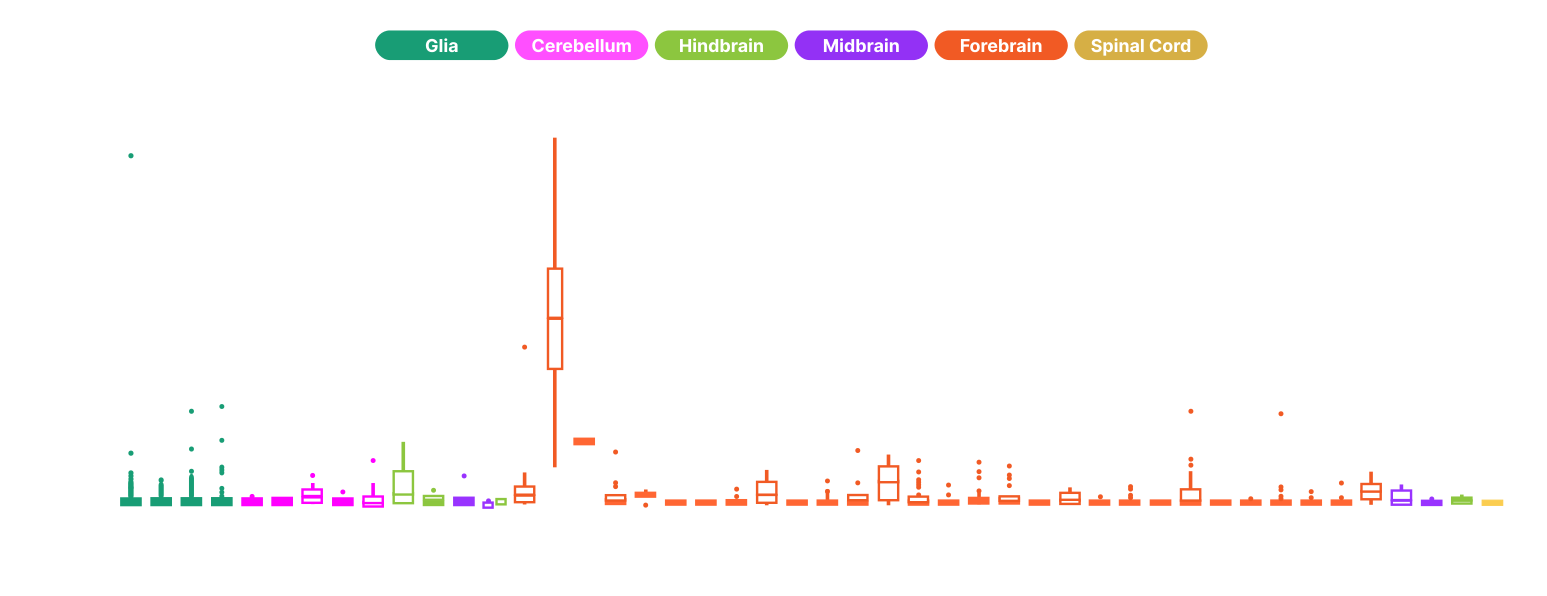

Non-specific replacement of dopamine (using levodopa or treating patients with drugs that act on dopamine receptors) lacks the precision to correct this imbalance and can cause “on-target” related side effects.
As a non-dopaminergic therapy, solengepras has the potential to provide a novel approach to treating Parkinson’s disease.
Solengepras 150 mg dose cohort demonstrated a statically significant reduction of 1.3 hours (p=0.02) in average daily OFF time versus placebo after only 27 days of treatment which represented a1.6-hour (p<0.0001) improvement from baseline.
Solengepras 150 mg dose cohort was associated with a dose-dependent improvement trend on the Unified Parkinson’s Disease Rating Scale (UPDRS) Part II score (activities of daily living) versus placebo. Trends to improvement in the UPDRS Part II after treatment with the solengepras 150 mg dose were seen in as little as four weeks, suggesting that solengepras may have broader benefits on the activities of daily living for PD patients beyond motor improvements.
Solengepras did not increase daytime sleepiness, as measured by the Epworth Sleepiness Scale (ESS), and was instead associated with a trend towards reduction in daytime sleepiness with the solengepras 150 mg dose versus placebo.
Solengepras was generally well-tolerated with few adverse events and low rates of dopaminergic adverse events across both dose cohorts.


Current
October 7, 2026
Cerevance Announces Positive Phase 3 ARISE Results: Once-daily Oral Solengepras Meets Primary Endpoint and Demonstrates Motor and Non-motor Benefits in Parkinson's Disease
- Solengepras 150 mg achieved a statistically significant reduction in daily OFF time, with benefit seen at Week 2
- Statistically significant improvements in secondary endpoints of ON time without troublesome dyskinesia and motor experiences of daily living (MDS-UPDRS Part II)
- Improvements in daytime sleepiness (Epworth Sleepiness Scale) and quality of life (PDQ-39, exploratory) point to broad motor and non-motor benefit
- Generally well tolerated, with fewer adverse events than those typically associated with dopaminergic adjunctive therapies, and a discontinuation rate similar to placebo
- Cerevance to meet with FDA to discuss the path to a potential New Drug Application
October 5, 2026
Cerevance Appoints Karl Kieburtz, M.D., M.P.H., as Chief Medical Officer
Appointment solidifies Cerevance’s leadership team as the company advances solengepras through Phase 3 development in Parkinson’s disease
May 12, 2026
Cerevance Completes Enrollment in Pivotal Phase 3 Parkinson’s Disease Trial and Closes Oversubscribed $20 Million Series C to Extend Runway into 2027
- Phase 3 ARISE trial of solengepras, a potential first-in-class non-dopaminergic therapy, is fully enrolled and topline data is expected at the end of Q3 2026
- Pivotal study targets daily OFF periods, a debilitating unmet need affecting millions of people living with Parkinson’s disease worldwide
- Oversubscribed $20 million Series C financing provides funding through topline readout and extends cash runway into mid-2027
- Financing supported by strong participation of existing investors, reinforcing strong alignment and continued conviction in Cerevance’s strategy
December 5, 2025
A New Era in Parkinson’s: Solengepras Leads the Shift Beyond Dopamine
- Phase 2 results selected as one of only 10 featured presentations in the Poster Tour at the 2025 Parkinson Study Group (PSG) Annual Meeting
- Pivotal Phase 3 ARISE trial evaluating solengepras as an adjunctive treatment in Parkinson’s disease is underway and actively enrolling patients
December 5, 2025
Cerevance Showcases Positive Phase 2 Results Demonstrating Significant Reduction in OFF Time with Solengepras as an Adjunctive Treatment in Parkinson’s Disease
- Phase 2 results selected as one of only 10 featured presentations in the Poster Tour at the 2025 Parkinson Study Group (PSG) Annual Meeting
- Pivotal Phase 3 ARISE trial evaluating solengepras as an adjunctive treatment in Parkinson’s disease is underway and actively enrolling patients
April 1, 2025
Cerevance Presents Topline Results from Phase 2 ASCEND Trial of Solengepras as Monotherapy Treatment for Early-Stage Parkinson’s Disease at AD/PD 2025
- Solengepras showed evidence of potential benefit in functional and non-motor symptoms versus placebo as measured by MDS-UPRDS Parts I, II, NMSS, and ESS, consistent with its novel non-dopaminergic mechanism of action
- This investigational treatment was generally well tolerated with no serious adverse events; fewer adverse events related to non-motor symptoms were reported in the solengepras arm
- Pivotal Phase 3 ARISE trial evaluating solengepras as adjunctive therapy in Parkinson’s disease is ongoing with topline data expected in first half of 2026
March 27, 2025
New Data to Be Presented at Upcoming Congresses Showcase Cerevance's Advanced Clinical Program in Parkinson’s Disease and Deep Pipeline for CNS-based Disorders
- Topline results from Phase 2 ASCEND trial of solengepras as a monotherapy treatment for early-stage Parkinson’s to be presented
- First presentation of data from Phase1 trial of novel KCNK13 inhibitor for CNS diseases targeting neuroinflammation
- Additional meeting presentations highlight potential of proprietary NETSseq platform to identify novel therapeutic targets for neurodegenerative diseases
November 18, 2024
Cerevance Doses First Patient in Pivotal Phase 3 ARISE Trial of Solengepras for Treatment of Parkinson’s Disease
- Solengepras is a potentially first-in-class, oral, non-dopaminergic investigational therapy in development for Parkinson’s disease
- ARISE will evaluate the efficacy of solengepras as an adjunctive therapy to levodopa and other background Parkinson’s disease medications
- Company expects to report topline data in the first half of 2026
November 11, 2024
Cerevance’s CVN293 Demonstrated Positive Phase 1 Results in Healthy Volunteers
- CVN293 was generally well-tolerated in healthy volunteers for up to 14-days of continuous dosing
- Dose-dependent exposure was observed with evidence of robust brain penetration
- Data supports potential advancement into Phase 2 for neurodegenerative diseases characterized by neuroinflammation such as Frontotemporal Dementia, AmyotrophicLateral Sclerosis, and Alzheimer’s Disease
October 21, 2024
Cerevance Announces Publication of Positive Phase 2 Results of Solengepras for the Treatment of Parkinson’s Disease in eClinical Medicine
Cerevance has published the full results from the Phase 2 clinical trial of solengepras, in eClinicalMedicine, a peer-reviewed journal published by The Lancet Discovery Science Suite. The results demonstrated that solengepras, a potentially first-in-class, oral, once-daily, non-dopaminergic, GPR6 inverse agonist, significantly reduced OFF time in individuals with Parkinson’s disease and was generally well-tolerated.
October 17, 2024
Sarah Sheikh Joins Cerevance’s Board of Directors
Cerevance is pleased to appoint Sarah Isabel Sheikh, M.Sc., B.M. B.Ch., MRCP, to its Board of Directors, effective immediately. Dr. Sheikh holds dual responsibilities at Takeda as the Head of Global Development for all therapeutic areas – Gastrointestinal and Inflammation, Neuroscience, Oncology, Plasma-Derived Therapies, and Vaccines – and as the Head of the Neuroscience Therapeutic Area.
October 8, 2024
Cerevance Achieves Second Milestone in Research Collaboration with Merck
Cerevance announced the achievement of the second milestone in its research collaboration with Merck, known as MSD outside of the United States and Canada. The research collaboration, which was announced in August of 2022, focuses on the identification and validation of novel therapeutic targets for Alzheimer’s disease. The achievement of this milestone triggers a payment from Merck to Cerevance.
August 12, 2024
Cerevance Appoints Sagar Vaidya, M.D., Ph.D., as Chief Medical Officer
Cerevance has appointed Dr. Sagar Vaidya, M.D., Ph.D., as Chief Medical Officer. Dr. Vaidya brings a wealth of experience in drug development, clinical research, and medical affairs, with a distinguished track record in advancing therapeutic programs for severe and life-threatening diseases.
May 2, 2024
Cerevance Achieves First Milestone in Research Collaboration with Merck
Cerevance achieves first milestone in research collaboration with Merck, known as MSD outside of the United States and Canada. The research collaboration, which was announced in August of 2022, focuses on the identification of novel therapeutic targets for Alzheimer’s disease. The achievement of this milestone triggers an undisclosed payment from Merck to Cerevance.
April 25, 2024
Cerevance Adds $47 Million in Series B-1 Extension to Advance Robust Clinical Pipeline
Cerevance announced an initial closing of its Series B-1 Extension financing round that will add $47 million to the $51 million previously raised bringing the total Series B-1 raise to $98 million.
April 22, 2024
Cerevance Publishes CVN293 in ACS Medicinal Chemistry Letters
Cerevance announces that the peer-reviewed journal, ACS Medicinal Chemistry Letters, has published the manuscript titled “Discovery of CVN293, a Brain Permeable KCNK13 (THIK-1) Inhibitor Suitable for Clinical Assessment”.
February 15, 2024
Cerevance Announces Publication of CVN766 in Bioorganic & Medicinal Chemistry Letters
Cerevance Announces Publication of CVN766 in Bioorganic & Medicinal Chemistry Letters describing the discovery and initial development of CVN766 in the peer-reviewed journal, Bioorganic & Medicinal Chemistry Letters. In the publication titled, “Discovery and first-time disclosure of CVN766, an exquisitely selective orexin 1 receptor antagonist”
November 13, 2023
Cerevance Doses First Patient in ASCEND Phase 2 Clinical Study of CVN424, a First-in-Class, Non-Dopaminergic Therapy for the Treatment of Parkinson’s Disease
Cerevance Doses First Patient in ASCEND Phase 2 Clinical Study of CVN424, a First-in-Class, Non-Dopaminergic Therapy for the Treatment of Parkinson’s Disease
September 19, 2023
Cerevance Doses First Subject in Phase 1 Clinical Study of CVN293, a Selective Inhibitor of KCNK13 Designed to Selectively Modulate Neuroinflammation, for the Treatment of ALS and Alzheimer’s Disease
Cerevance today announced that the first subject has been dosed in the Phase 1 clinical study evaluating the safety, tolerability, and pharmacokinetics of CVN293.
August 28, 2023
Fierce Biotech Names Cerevance a “Fierce 15” Biotech Company of 2023
Cerevance has been named by Fierce Biotech as one of the most promising early-stage biotechnology companies in the industry in 2023, showcased on this year’s Fierce 15 list.
July 10, 2023
Cerevance to Present at the Alzheimers Association International Conference
Cerevance to present a poster presentation at the upcoming Alzheimer’s Association International Conference (AAIC), taking place in Amsterdam, Netherlands, July 16 – 20, 2023.
May 16, 2023
Oral Presentation of Phase 1 Data on CVN766 at American Society of Clinical Psychopharmacology (ASCP)
Cerevance to present an oral presentation at the upcomingAmerican Society of Clinical Psychopharmacology (ASCP) conference, taking place in Miami, Florida, May 30 – June 2, 2023.
May 9, 2023
Cerevance to Present at Neurodegeneration: New Biology Guiding the Next Generation of Therapeutic Development
Cerevance today announced plans to present at the upcoming Neurodegeneration: New Biology Guiding the NextGeneration of Therapeutic Development conference, taking place in British Columbia, Canada, May 15 – 19, 2023.
April 13, 2023
Poster Presentation at the BNA International Festival of Neuroscience
Cerevance today announced a poster presentation at the British Neuroscience Association (BNA) 2023 International Festival of Neuroscience in Brighton, United Kingdom being held April 23-26, 2023
March 21, 2023
Cerevance to Present at Two Medicinal Chemistry Conferences
Cerevance to present at two upcoming medicinal chemistry conferences:
- 7th RSC-BMCS / SCI Symposium on Ion Channels as Therapeutic Targets held March 27-28 in Cambridge, UK
- Binding Kinetics and Mechanistic PK/PD Modeling in Early Drug Discovery Conference held March 27-28 in Cambridge, UK
March 20, 2023
Cerevance to Present at AD/PD™ 2023 International Conference
- Positive CVN424 Phase 2 data for Parkinson’s disease to be presented
- Presentation of NETSseq platform’s ability to reveal novel targets to inform CNS drug development
- Novel target, CVN417, for the potential treatment of Parkinson’s disease to be disclosed
February 13, 2023
Cerevance Expands Series B Financing with Additional $51 Million
- Proceeds will advance Cerevance’s potential first-in-class programs developed using proprietary NETSseq platform
- CVN424 for Parkinson’s disease will advance to Phase 2 monotherapy study in Q2 2023
- CVN766 for negative and cognitive symptoms of schizophrenia will advance to Phase 2 study in Q4 2023
- CVN293 for Amyotrophic Lateral Sclerosis will advance to Phase 1 study in Q3 2023
January 27, 2023
Cerevance Announces Publication in Organic Process Research and Development
Cerevance today announced the publication in Organic Process Research and Development entitled, “Scalable Synthesis of CVN424, an Inverse Agonist of the GPR6 Receptor”.
January 9, 2023
Cerevance Announces Positive Topline Data from Phase 1 Clinical Trial of CVN766 for the Potential Use in the Treatment of Schizophrenia
- CVN766 was well tolerated with no serious adverse events
- CVN766, which has >1000-fold selectivity for the orexin 1 receptor, was well tolerated and showed no evidence of somnolence
- Data supports once a day dosing of CVN766 in future studies
November 30, 2022
Cerevance to Present Preclinical Data During the Cold Spring Harbor Laboratory (CSHL) Neurodegenerative Diseases – Biology and Therapeutics Conference and Publication in Neuropharmacology
- Presentation highlights a novel target identified for Alzheimer’s disease using Cerevance’s proprietary NETSseq platform
- Cerevance’s THIK-1 targeting inhibitor, C101248, demonstrated positive results in human and mouse cell based and electrophysiology assays relevant to neuroinflammation in neurodegenerative disease
- Data has been concurrently published in the peer-reviewed journal, Neuropharmacology
August 9, 2022
Cerevance Establishes Strategic Research Collaboration with Merck for the Discovery of Novel Targets in Alzheimer’s Disease
Cerevance today announced a multi-year strategic research collaboration with Merck, known as MSD outside the United States and Canada, to identify novel targets for Alzheimer’s disease utilizing Cerevance’s proprietary Nuclear Enriched Transcript Sort sequencing (NETSseq) technology platform.
April 19, 2022
Cerevance Announces Leadership Transition to Implement Next Phase of Growth in Advancing Novel Therapeutics for Brain Diseases
Cerevance today announced the appointment of Craig Thompson to chief executive officer. Mr. Thompson brings over 25 years of commercial and marketing leadership experience in the biotech and pharmaceutical industries to the company.
March 31, 2022
Cerevance Reports Positive Phase 2 Clinical Trial Results with CVN424, a Parkinson’s Disease Drug Working Through a New Mechanism
Cerevance today announced the completion of its Phase 2 clinical trial of CVN424, the company’s first-in-class, once-a-day, orally-delivered compound in development for the treatment of Parkinson’s disease.
January 25, 2022
Cerevance Doses First Subjects in Phase 1 Clinical Trial of CVN766
Cerevance Doses First Subjects in Phase 1 Clinical Trial of CVN766
September 8, 2021
Neuroscience Drug Development Veteran Mike Poole, M.D., FACP, to Join Cerevance Board of Directors
Cerevance today announced the appointment of Mike Poole, M.D., FACP, to Cerevance’s Board of Directors.
February 1, 2021
Cerevance Appoints Naidong Ye, Ph.D. as Vice President and Head of Chemistry, Manufacturing and Controls
Cerevance today announced the appointment of Naidong Ye, Ph.D., a seasoned chemist with extensive pharmaceutical industry experience, as vice president and head of chemistry, manufacturing and controls (CMC).
February 1, 2021
Cerevance Appoints Carrie Ann Cook as Chief Business Officer
Cerevance, today announced the appointment of Carrie Ann Cook, a global business development executive with more than 20 years of experience in the pharmaceutical industry, as chief business officer
December 8, 2020
Cerevance Appoints David Lubner to Board of Directors
Cerevance today announced the appointment of David Lubner, a senior finance executive with more than 25 years of experience in the life sciences industry, to Cerevance’s Board of Directors.
November 16, 2020
Cerevance’s CVN058 Achieves Primary Endpoint in Phase 1b Schizophrenia Cognition Study
Cerevance today announced positive results from a Phase 1b clinical trial evaluating the company’s oral compound, CVN058, in a biomarker study evaluating its potential as a treatment for cognitive impairment associated with schizophrenia (CIAS).
July 21, 2020
Cerevance Expands Series B Financing to $65 Million
Cerevance, a private drug discovery and development company focused on brain diseases, has expanded its Series B financing round, adding $20 million to the $45 million that it announced in April.
April 14, 2020
Cerevance Closes $45 Million Series B Financing
Cerevance has closed a Series B financing, bringing in $45 million from new investors including GV (formerly Google Ventures), Bill Gates and Foresite Capital, as well as all of the company’s previous investors...
January 7, 2020
Cerevance Appoints Clinical Development Veteran Dr. Aoife Brennan to Board of Directors
Dr. Brennan is currently president and chief executive officer of Synlogic, Inc. (Nasdaq:SYBX), a clinical stage biotechnology company applying synthetic biology to beneficial microbes to develop novel, living medicines.
December 17, 2019
Cerevance Enters Research Collaboration with Takeda to Advance New Treatments for Gastrointestinal Disorders
Cerevance has formed a multi-year research alliance with Takeda Pharmaceutical Company Limited (“Takeda”) to identify novel target proteins expressed in the central nervous system and to develop new therapies against them for certain GI disorders.
December 4, 2019
Cerevance Initiates Phase 2 Trial of CVN424 for Parkinson’s Disease
Cerevance, announced today the initiation of a Phase 2 clinical trial of CVN424, an oral, first-in-class compound that selectively modulates a novel, non-dopaminergic target selectively expressed in an important class of neurons in the striatum.
June 3, 2019
Cerevance Appoints CNS Drug Developer James Summers, Ph.D. as Scientific Advisor
Cerevance has appointed pharmaceutical industry veteran, James Summers, Ph.D., as a key scientific advisor to guide the company in its drug discovery and development efforts. Dr. Summers brings extensive experience in the discovery of...
April 30, 2019
Cerevance Achieves Key Endpoints in Phase 1 Clinical Trial of Novel Parkinson’s Disease Drug CVN424
Cerevance, a clinical stage biopharmaceutical company advancing new medicines for brain diseases, has successfully completed its Phase 1 clinical trial of CVN424, the company’s first-in-class, orally-delivered compound in development for the treatment of Parkinson’s disease.
April 16, 2019
Cerevance Appoints Industry Veteran Roland Bürli, Ph.D. as Vice President of Drug Discovery
Roland Bürli, Ph.D. as Vice President of Drug Discovery brings expertise in preclinical drug discovery, specializing in medicinal and synthetic chemistry, with a proven track record from hit identification through lead optimization, having led efforts that discovered six pre-clinical candidate molecules, including a program now in Phase II.
March 5, 2019
Industry Central Nervous System Specialist Lee Dawson, Ph.D. Joins Cerevance as VP of Neuroscience
Dawson brings 25 years of career experience spearheading drug discovery and development across companies based in the United States, Japan and the United Kingdom. Most recently, he served as Vice President of CNS drug development at Astex Pharmaceuticals, where he established and developed their global neuroscience research strategy.
October 9, 2018
Cerevance Appoints Ted Hibben as Chief Business Officer
A twenty-year biotechnology industry veteran, Mr. Hibben has formed over $2 billion in platform and product-based R&D collaborations. Prior to joining Cerevance, Mr. Hibben served as Chief Business Officer at Catabasis where he led partnering activities.
September 25, 2018
Cerevance Announces First-in-Human Dosing of CVN424 for the Treatment of Parkinson’s Disease
Cerevance, a clinical-stage drug discovery and development company focused on brain diseases, today announced the start of dosing in a Phase I first-in-human clinical trial of CVN424, an oral compound being developed for symptomatic treatment of Parkinson’s disease.
February 21, 2018
Cerevance Kicks Off 2018 with Additional $10 Million of Infusions
Cerevance, a drug discovery and development company focused on brain diseases, today announced that it has received an additional equity investment as well as a non-dilutive cash payment in the first six weeks of 2018 totaling more than $10 million.
November 27, 2017
Cerevance Appoints David H. Margolin, M.D., Ph.D., as Senior Vice President of Clinical and Translational Medicine
Prior to joining Cerevance, Dr. Margolin served in several leadership roles at Sanofi-Genzyme over a 14-year period. There, he leveraged his expertise in designing and leading translational medicine initiatives as well as clinical trials from phase 1 to phase 4 across various neurologic and rare disease indications...
October 24, 2017
Trailblazer in Molecular Genetics and Neuroscience, Jeremy Nathans, M.D., Ph.D., to Advise Cerevance
Dr. Nathans is Professor of Molecular Biology and Genetics, Neuroscience and Ophthalmology at the Johns Hopkins University School of Medicine in Baltimore, Maryland, where his research focuses on molecular mechanisms of visual system development, function, and disease. He is also an Investigator in the Howard Hughes Medical Institute.
October 17, 2017
Cerevance Licenses Human Brain Tissue Profiling Technology from The Rockefeller University
Cerevance, a drug discovery and development company focused on brain diseases, today announced that it has signed an agreement with The Rockefeller University to license a novel technology for profiling specific cell populations in human brain tissue
October 12, 2017
Harvard’s Rudolph Tanzi, Ph.D., a Leader in Alzheimer’s Disease Genetics, Joins Cerevance’s Advisory Board
Cerevance, a drug discovery and development company focused on brain diseases, today announced that Rudolph Tanzi, Ph.D., has joined the company as a senior-level scientific advisor.
October 5, 2017
Stanford Neuroscientist, Robert Malenka, M.D., Ph.D., to Advise Cerevance
Cerevance, a drug discovery and development company, today announced that Robert Malenka, M.D., Ph.D., has joined the company as a senior-level scientific advisor. Dr. Malenka is the Pritzker Professor of Psychiatry and Behavioral Sciences at Stanford University.
May 3, 2017
Dementia Discovery Fund to Invest $5M in Cerevance to Seek New Treatments for Dementia
The Dementia Discovery Fund, an innovative global investment fund managed by SV Life Sciences and launched in 2015 to develop disease modifying drugs for dementia, today announced a $5 million investment in the initial financing round of start-up drug discovery company, Cerevance.
December 2, 2016
Cerevance Launched With New Technology, Drug Portfolio and $36M in Cash to Tackle Brain Diseases
- Takeda and Lightstone Ventures Participate in Series A Financing
- Former Takeda Cambridge UK employees, CNS programs moved to create turn-key discovery capabilities
Current
October 7, 2026
Cerevance to Present Positive Phase 3 ARISE Results: Once-daily Oral Solengepras Meets Primary Endpoint and Demonstrates Motor and Non-motor Benefits in Parkinson's Disease
April 9, 2026
Cerevance to Present Positive Phase 2 Solengepras Data in Parkinson’s Disease at the American Academy of Neurology 2026 Annual Meeting
April 8, 2026
Cerevance to Participate in the 25th Annual Needham Virtual Healthcare Conference
March 10, 2026
Cerevance to Present Phase 2 Trial Results on OFF Time and Sleep‑Related Outcomes with Solengepras in Parkinson’s Disease at AD/PD™ 2026
February 23, 2026
Cerevance to Participate in the TD Cowen 46th Annual Health Care Conference
December 1, 2025
Cerevance to Participate in RBC Capital Markets 2025 Healthcare Private Company Conference
November 24, 2025
Cerevance to Highlight Potential of Solengepras in Parkinson’s Disease at the 2025 Parkinson Study Group Annual Meeting
November 17, 2025
Cerevance to Participate in the TD Cowen Treatment Advancements in Obesity and Related Disorders Summit
September 22, 2025
Cerevance to Present Phase 2 Data on Solengepras in Parkinson’s Disease at the 2025 International Congress of Parkinson's Disease and Movement Disorders
August 7, 2025
Cerevance to Participate in Piper Sandler Virtual CNS Symposium
July 11, 2025
Cerevance Announces Presentations at the Alzheimer's Association International Conference 2025
April 8, 2025
Cerevance Presents Positive Results from Phase 1 Study of CVN293 at American Academy of Neurology 2025 Annual Meeting
April 1, 2025
Cerevance Presents Topline Results from Phase 2 ASCEND Trial of Solengepras as Monotherapy Treatment for Early-Stage Parkinson’s Disease at AD/PD 2025
September 23, 2024
Cerevance to Participate in a Panel Discussion at Fierce Biotech Summit 2024
June 18, 2024
Cerevance Presents at The Federation of European Neuroscience Societies (FENS) Forum 2024
May 20, 2024
Cerevance to Participate in Precision Neurotherapeutics Panel During the 2024 BIO International Convention
May 9, 2024
Cerevance Presents at IAPRD XXIX World Congress on Parkinson’s Disease and Related Disorders
April 29, 2024
Cerevance to Present at RBC Capital Markets 2024 Global Healthcare Conference
April 29, 2024
Cerevance to Participate at Wells Fargo Virtual Private Biotech Symposium
April 17, 2024
Cerevance Presents at 35th Symposium on Medicinal Chemistry in Eastern England
April 2, 2024
Cerevance to Participate at the 23rd Annual Needham Virtual Health Care Conference
March 13, 2024
Cerevance Announces Presentation at Alzheimer’s Research UK Conference
February 27, 2024
Cerevance Announces Presentation at AD/PD™ 2024 International Conference
February 22, 2024
Cerevance to Participate at the TD Cowen 44th Annual Health Care Conference
December 5, 2023
Cerevance to Participate in Fireside Chat at the 2023 RBC Capital Markets Healthcare Private Company Virtual Conference
November 28, 2023
Cerevance Announces Presentation at the 34th International Symposium on ALS/MND
November 7, 2023
Cerevance Announces Presentation at the SFN Neuroscience 2023 Annual Meeting
November 1, 2023
Cerevance to Participate in the Truist Securities BioPharma Symposium
October 25, 2023
Cerevance to Participate at the Wells Fargo 2023 Private Biotech Symposium
October 18, 2023
Cerevance to Participate at the Leerink Biopharma Private Company Connect
October 10, 2023
Cerevance to Participate at the 3rd Annual Needham Biotech Private Company Forum. Company management will host one-on-one meetings during the conference.
October 4, 2023
Cerevance to Participate at the 2023 Life Sciences Private Company Showcase
October 2, 2023
Cerevance to Present at the 36th European College of Neuropsychopharmacology Congress
September 5, 2023
Cerevance to Present During the 6th Annual LSX World Congress USA
August 31, 2023
22nd Society of Chemical Industry / Royal Society of Chemistry Medicinal Chemistry Symposium
July 10, 2023
Alzheimers Association International Conference
June 28, 2023
XVI European Meeting on Glial Cells in Health and Disease
June 26, 2023
Gordon Research Conference
May 16, 2023
Phase 1 Data on CVN766 at American Society of Clinical Psychopharmacology (ASCP)
May 9, 2023
Neurodegeneration: New Biology Guiding the Next Generation of Therapeutic Development
May 8, 2023
2023 RBC Capital Markets Global Healthcare Conference
April 13, 2023
BNA International Festival of Neuroscience
April 10, 2023
Needham Healthcare Conference
March 27, 2023
Chief Medical Officer Summit 360˚
March 21, 2023
Two Medicinal Chemistry Conferences
March 20, 2023
AD/PD™ 2023 International Conference
March 7, 2023
Alzheimer’s Research UK Conference 2023
January 24, 2023
SVB Global Biopharma Conference
December 7, 2022
Cerevance to Present at the RBC Capital Markets Virtual Healthcare Private Company Conference
November 30, 2022
Biology and Therapeutics Conference
June 16, 2022
5th Annual LSX World Congress USA
June 8, 2022
2022 BIO International Convention

The ASCEND Parkinson’s Disease Clinical Research Study
The ASCEND clinical study is evaluating whether CVN424, an investigational drug, is safe and effective in improving the motor and non-motor symptoms of Parkinson’s disease.
